Mohawk Central.
Valley story · Railroads & industry

From ford to boomtown: how Utica became a city

A river crossing named for a ruined African city became, in a few canal-powered decades, one of America's busiest inland towns — then a textile giant, then a place that had to reinvent itself. It's done that more than once.

Utica · New Hartford · Whitesboro · 1798–present · 2 min read · Last fact-checked Jul 17, 2026
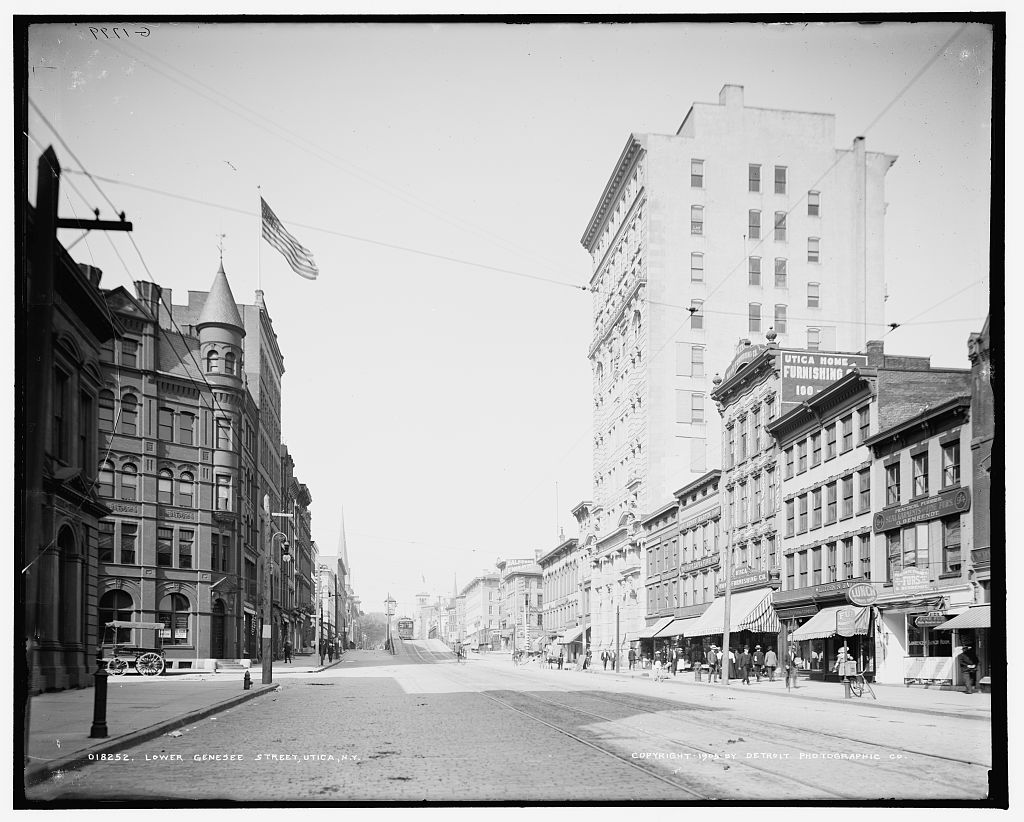
A wide cobblestone street lined with four- and five-story brick commercial blocks, a streetcar in the distance, an American flag flying at left, and pedestrians along the sidewalks.
Lower Genesee Street, Utica, in 1905 — streetcars, awnings and the ten-story blocks of a city at full steam. (1905)Detroit Publishing Co. — Library of Congress, Prints & Photographs Division · No known restrictions on publication. View original ↗

Old Fort Schuyler

Utica began as a shallow ford on the Mohawk guarded by a small colonial fort — Old Fort Schuyler, built in 1758.1 The village that grew at the crossing incorporated in 1798 under a name locals reputedly drew from a hat: Utica, after the ancient North African city.12 When the Erie Canal arrived in 1819–1825, the crossing town became a port, and growth went vertical: Utica chartered as a city in 1832.7

A second canal sealed the deal. The Chenango Canal, opened in 1837, ran south from Utica to Binghamton and brought Pennsylvania coal cheap enough to power steam mills.8 Utica's answer to falling water it didn't have was steam it could now afford.

Spindle city

From the mid-1800s, cotton and knitting mills rose along the canal and the railroads that followed the same corridor — Utica Steam Cotton Mills, organized in 1848, among the first in the Valley to run on steam.3 By 1900 the city was calling itself the knit-goods capital of the world: its cotton mills' sheets (brands like Utica and Mohawk Valley) and its knitting companies' underwear (Utica Knitting, Oneita) sold nationwide.2 The wealth built lower Genesee Street's blocks, the parks system, and in 1914 a marble monument to railroad confidence: Union Station, opened that May.5

One famous business began here and failed here: Frank Woolworth opened his first "Great Five Cent Store" on Bleecker Street on February 22, 1879. Utica shoppers shrugged; the store folded within months. He tried again in Lancaster, Pennsylvania that June — and built the century's great retail empire from lessons learned in Utica.4

After the mills

Southern competition squeezed the mills from the 1930s, and after World War II the collapse came fast — mill after mill closed or moved south through the 1950s.6 Utica spent the second half of the century absorbing the blow — first with electronics plants, later with the losses when those too proved mortal. What kept the city alive was what had always kept it alive: new arrivals. Wave after wave of immigrants and refugees (that story is here) kept neighborhoods, parishes and kitchens going.

The current chapter — a rebuilt brewery district, a hospital-anchored downtown, and the Wolfspeed chip fab that opened at Marcy in 2022 — is the newest version of a very old Utica pattern: the economy changes, the crossroads remains.9
Then & now

📍 Lower Genesee Street looking south from near Bagg's Square, Utica
Then
Lower Genesee Street in 1905: cobblestones, streetcar tracks, brick commercial blocks and pedestrians.
Lower Genesee Street, 1905. (1905)Detroit Publishing Co. — Library of Congress, Prints & Photographs Division · No known restrictions on publication. View original ↗
Now
Today: your photo goes here.

We're looking for a present-day photo from this same spot. Stand near Bagg's Square looking south up Genesee Street and send us your shot.

Send today’s view →

Timeline

From the archives

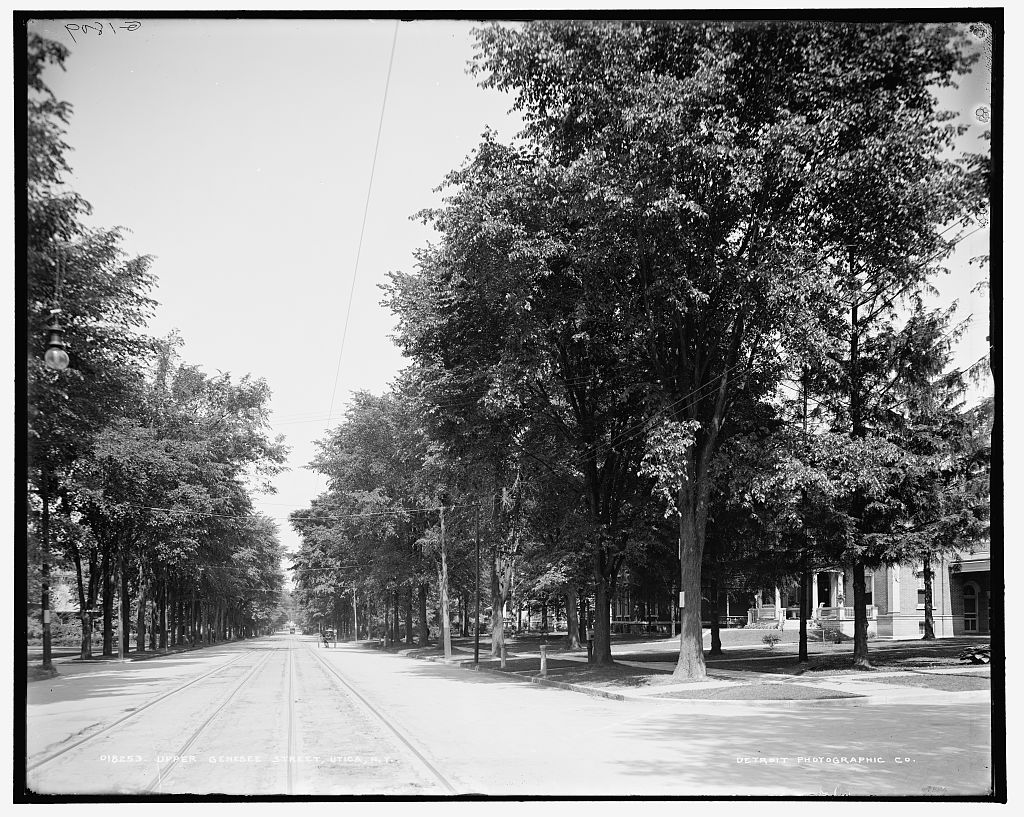
A broad residential street with streetcar tracks receding into the distance under a canopy of large elm trees, with a horse-drawn carriage far off.
Upper Genesee Street around 1900, when the mill-money mansions ran south under the elms. (ca. 1900)Detroit Publishing Co. — Library of Congress, Prints & Photographs Division · No known restrictions on publication. View original ↗
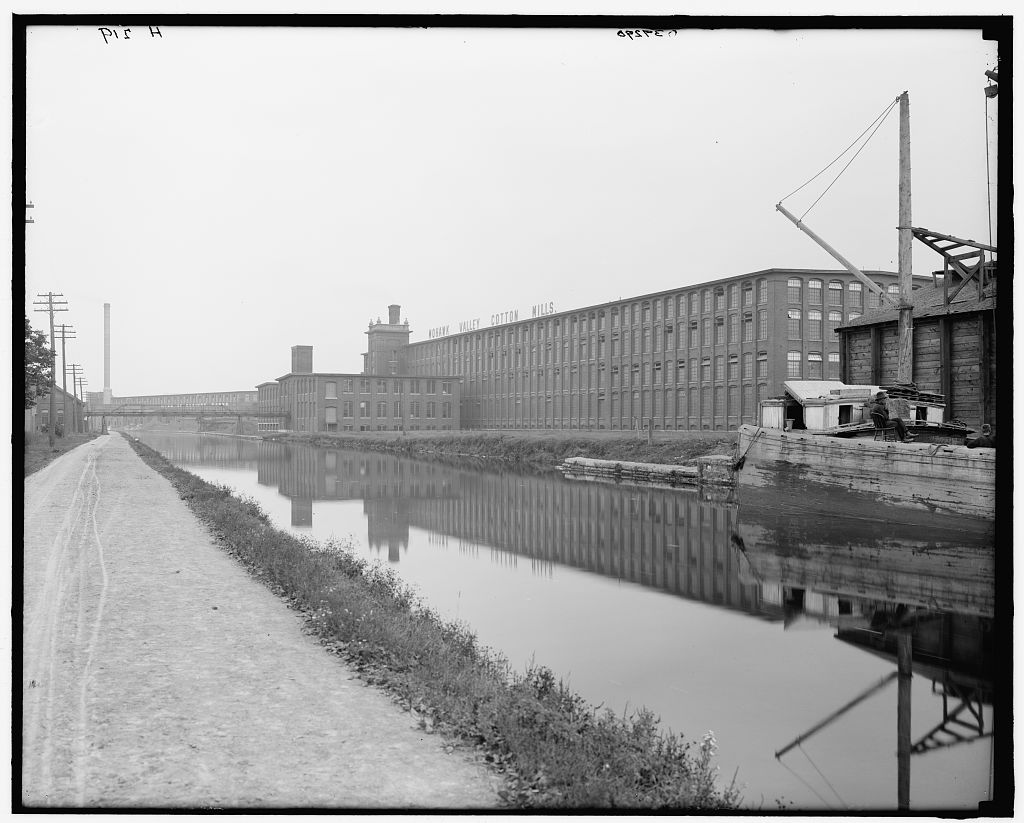
A long brick mill building labeled Mohawk Valley Cotton Mills reflected in the Erie Canal, with a towpath in the foreground and a barge at right.
The Mohawk Valley Cotton Mills on the Erie Canal, around 1900. (ca. 1900)Detroit Publishing Co. — Library of Congress, Prints & Photographs Division · No known restrictions on publication. View original ↗

Sources & further reading

Numbers match the citations in the text
  1. History of the Mohawk Valley: Gateway to the West (Nelson Greene, ed.), Ch. 130: The City of Utica ↗ — Schenectady Digital History Archive, 1925
  2. An Overview of Utica's History & Architecture ↗ — Better Utica Downtown, citing Oneida County Historical Society
  3. Utica Steam Cotton Mills ↗ — Better Utica Downtown / Landmarks Society of Greater Utica
  4. The (Not So) Great 5¢ Store in Utica, NY ↗ — The Woolworths Museum
  5. Utica, NY (UCA) — station history ↗ — Great American Stations (Amtrak)
  6. History of Utica, NY ↗ — Landmarks Society of Greater Utica
  7. Community — City of Utica ↗ — City of Utica (official)
  8. History of the Chenango Canal ↗ — Chenango Canal Association
  9. Governor Hochul Announces the Grand Opening of Wolfspeed's $1 Billion Silicon Carbide Fabrication Facility ↗ — Office of the Governor of New York, April 25, 2022
  10. Oneida County History Center ↗ — Oneida County History Center

Related stories

Spot a mistake, or have material that adds to this story? Tell us. Last fact-checked Jul 17, 2026 · All history ↑