Mohawk Central.
Valley story · Erie Canal & expansion

Dug by hand, starting in Rome: how the Erie Canal built the Valley

On July 4, 1817, workers turned the first shovelful of the Erie Canal in Rome. Within a decade the ditch remade every town along the Mohawk — and it's still out there, under streets and behind backyards.

Rome · Utica · Little Falls · Frankfort · Ilion · Mohawk · Herkimer · 1817–1918 · 2 min read · Last fact-checked Jul 17, 2026
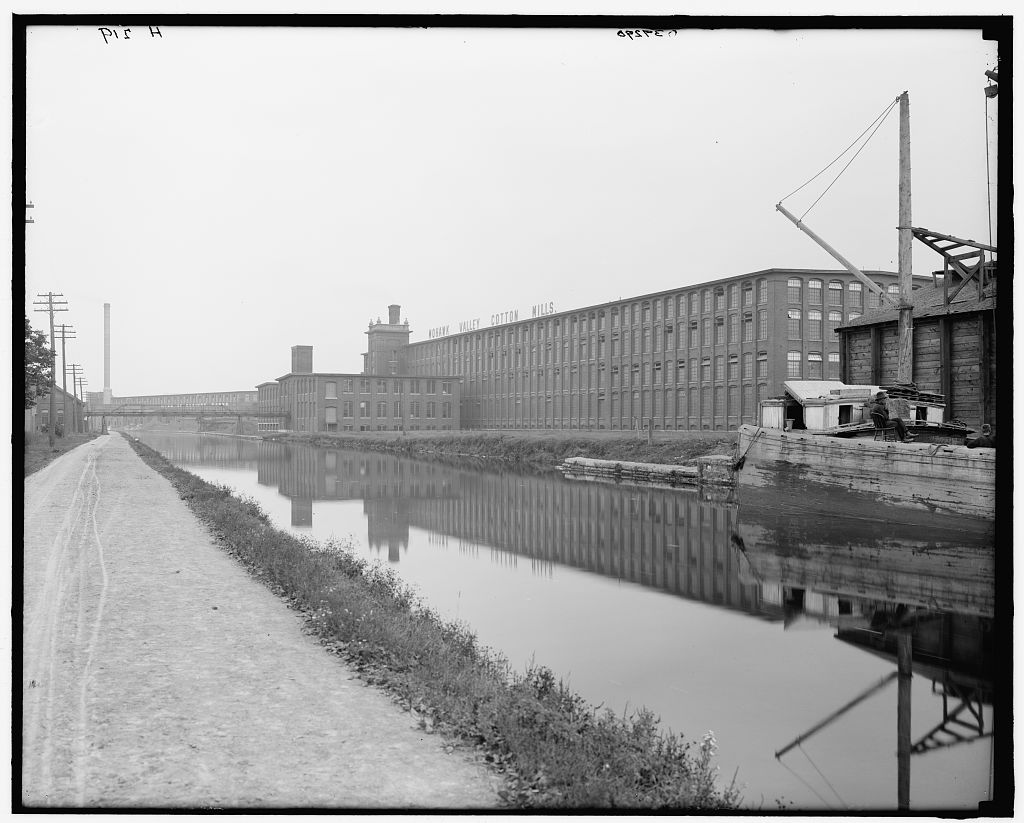
A long brick mill building labeled Mohawk Valley Cotton Mills reflected in the still water of the Erie Canal, with a dirt towpath in the foreground and a wooden barge tied up at right.
The Erie Canal at the Mohawk Valley Cotton Mills, Utica, around 1900 — towpath on the left, a barge tied up on the right. The canal delivered coal and cotton straight to the mill wall. (ca. 1900)Detroit Publishing Co. — Library of Congress, Prints & Photographs Division · No known restrictions on publication. View original ↗

Why Rome?

When New York finally committed to digging a 363-mile canal from the Hudson to Lake Erie, engineers started in the middle — at Rome, on July 4, 1817.4 The stretch west of Rome was flat, soft-bottomed and lock-free, the easiest miles of the whole route. The state wanted fast, visible progress to keep skeptics quiet, and it got it: the first working section, from Rome to Utica, opened to boats in October 1819.3

The full canal took eight years, dug largely by hand and horse by local laborers and immigrant crews. Critics mocked it as "Clinton's Ditch" after Governor DeWitt Clinton, the project's great champion.1 The name stopped being an insult almost immediately.

What it did to the Valley

The canal cut shipping costs by roughly 90 percent compared with hauling by wagon — and cut weeks to days.1 The Mohawk Valley towns sat on some of the busiest miles of the canal. Utica, a river-crossing village, became a boomtown and chartered as a city in 1832. Little Falls, Frankfort, Ilion, Mohawk and Herkimer all grew up as canal ports; warehouses, boatyards and taverns lined the water.

The canal was enlarged between 1836 and 1862 to handle bigger boats,2 then replaced altogether in 1918 by the Barge Canal, which moved the channel into the Mohawk River itself.2 The old ditch through the middle of the cities was filled in — which is why so much of it now hides in plain sight (see The canal under your feet).

Still open for business

The Erie Canal never actually closed. Today's Barge Canal alignment still operates seasonally for recreational boats, its locks — including the giant Lock 17 at Little Falls — working much as they did in 1918. The old towpath has a second life too: long stretches of the Erie Canalway Trail (part of the Empire State Trail) follow it across the Valley,7 and the Old Erie Canal State Historic Park preserves a 36-mile stretch of the enlarged canal between DeWitt and Rome.6
Timeline

From the archives

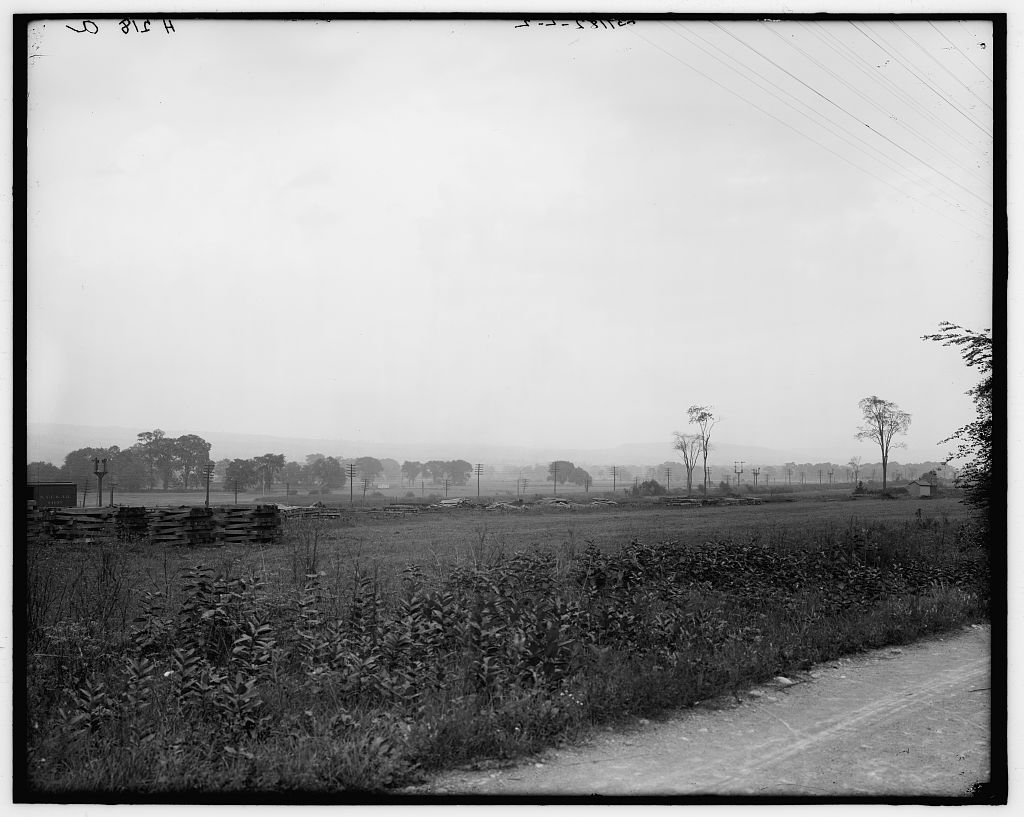
A wide, flat valley landscape with telegraph poles, scattered trees and stacked lumber under a hazy sky, a dirt road in the foreground.
The Erie Canal corridor crossing open country outside Utica, around 1900. Much of the canal ran through farmland like this between towns. (ca. 1900)Detroit Publishing Co. — Library of Congress, Prints & Photographs Division · No known restrictions on publication. View original ↗

Sources & further reading

Numbers match the citations in the text
  1. History & Culture ↗ — Erie Canalway National Heritage Corridor
  2. The Erie Canal (history, enlargement and Barge Canal) ↗ — eriecanal.org, Frank E. Sadowski Jr.
  3. Erie Canal Chronology ↗ — eriecanal.org, Frank E. Sadowski Jr.
  4. History of the Erie Canal ↗ — The Erie Canal Foundation, Rome NY
  5. Early New York State Waterways & the Inland Lock Navigation Company ↗ — National Park Service
  6. Old Erie Canal State Historic Park ↗ — NYS Parks
  7. About the Canalway Trail ↗ — New York State Canal Corporation

Related stories

Spot a mistake, or have material that adds to this story? Tell us. Last fact-checked Jul 17, 2026 · All history ↑