
The plan to cut New York in half
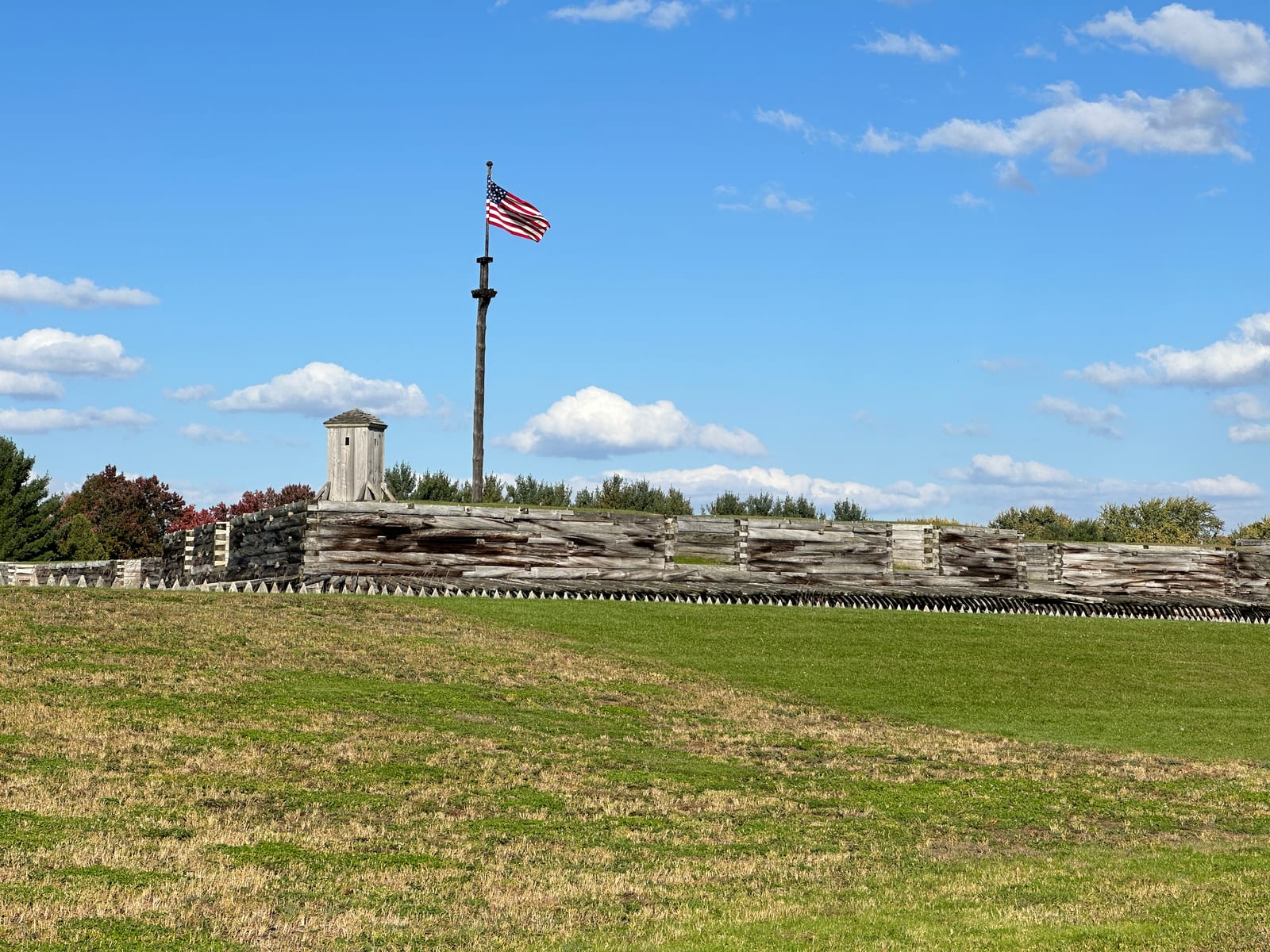
Britain's 1777 strategy was a three-pronged squeeze on New York: Burgoyne south from Canada, Howe up the Hudson, and Barry St. Leger east down the Mohawk Valley with a mixed force of regulars, Loyalists, German troops and Haudenosaunee allies. In St. Leger's path sat one obstacle: the old French-and-Indian-War fort at the Oneida Carrying Place, rebuilt and garrisoned by roughly 750–800 Continental soldiers under Colonel Peter Gansevoort.1 (The Americans had renamed it Fort Schuyler, for General Philip Schuyler; history kept the older name.2)
St. Leger's army arrived before the fort on August 2.1 When a relief column of Tryon County militia was ambushed at Oriskany on August 6, soldiers from the fort sortied under Lieutenant Colonel Marinus Willett and ransacked the near-empty enemy camps — carrying off blankets, kettles, weapons and Sir John Johnson's own papers — a raid that stung St. Leger's Indigenous allies, who had already borne the worst of Oriskany's casualties.3
The siege collapses
The fort's guns and walls held. Then word spread through the besiegers' camp that a large American relief force under Benedict Arnold — then still the Revolution's most aggressive field commander — was coming up the Valley. The reports, amplified by design, broke the siege: St. Leger's allies departed, and on August 22 his army abandoned its lines and retreated toward Canada.1 The western prong of Britain's campaign was finished; Burgoyne, unsupported, surrendered at Saratoga on October 17.5
Utica's and Rome's corner of the war was brief, brutal and consequential: the Valley held, and the victory at Saratoga it enabled brought France into the war.